Timeline · In order, with dates
GSM Goes Live
The first GSM networks opened in 1991 and set the pattern of a standard defined before deployment rather than after it.
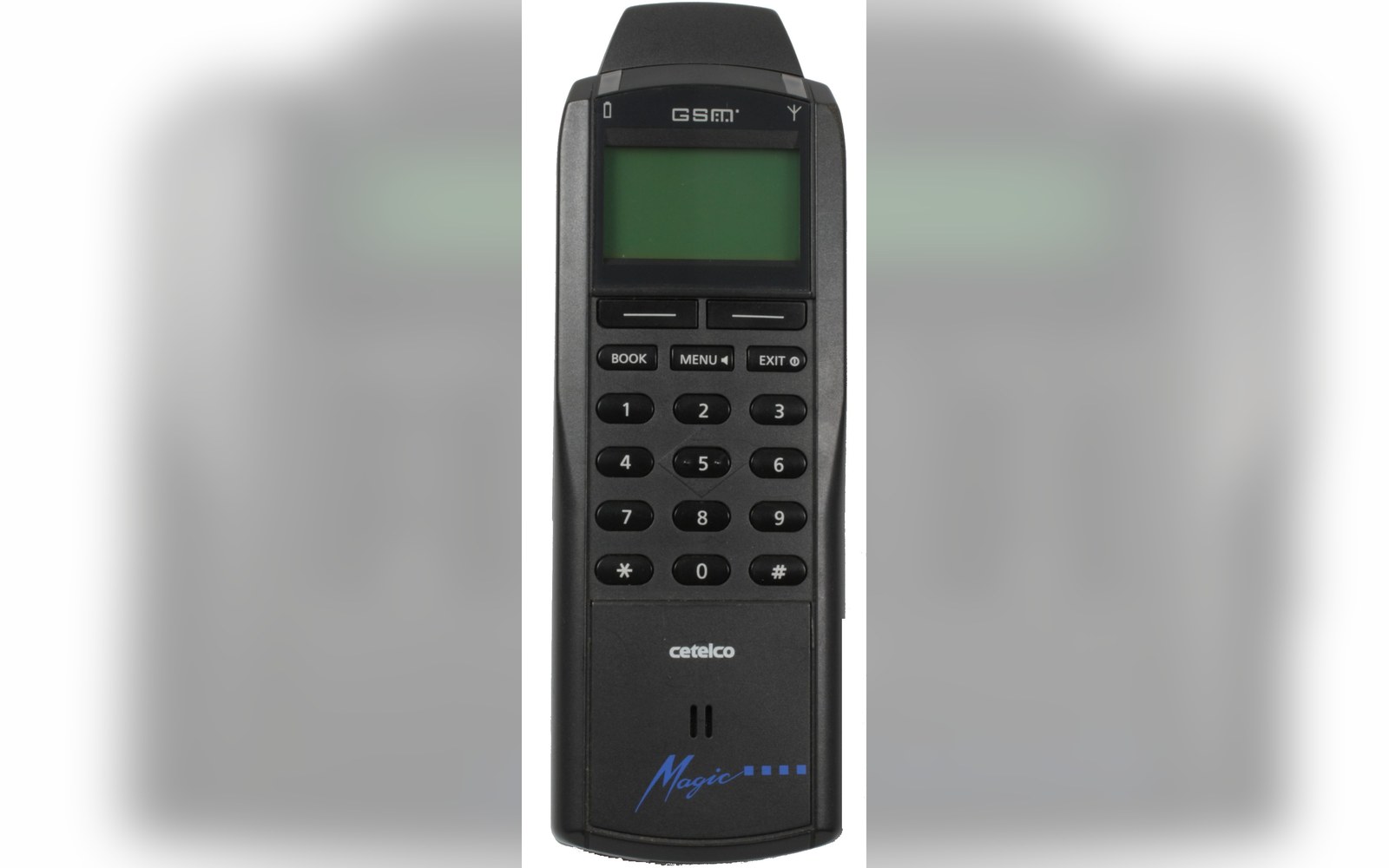
The first digital cellular network launched in 1991 under a standard written before a single base station was switched on — a governance model the industry has followed ever since.
The Standard Before the Signal
Before GSM, Europe's mobile landscape was a patchwork. The Nordic countries ran NMT, the UK had TACS, West Germany had C-Netz, and none of them talked to each other. A subscriber in Stockholm could not roam to Paris. That fragmentation was the political and commercial problem that the Groupe Spécial Mobile — the committee whose initials GSM eventually kept — was convened to solve, under the auspices of CEPT, the Conference of European Postal and Telecommunications Administrations, in 1982.
What made GSM unusual was the order of events. The committee spent nearly a decade writing the specification in full before network operators committed infrastructure. By the time the first switch-on happened, the standard covered the air interface, the signalling protocols, the architecture of base-station controllers and mobile switching centres, roaming and handover, and the SIM — the removable identity module that separated the subscriber from the hardware. That last detail, easy to underestimate, made every subsequent change to the subscriber relationship administratively tractable.
The air interface GSM standardised was TDMA, time-division multiple access, on the 900 MHz band. Each 200 kHz carrier was divided into eight time slots, and calls were assigned to slots rather than dedicated frequencies. The choice of 900 MHz was deliberate: the band propagates far enough to make rural coverage economically plausible with a manageable number of masts. Encoding used the GMSK modulation scheme — Gaussian minimum-shift keying — and voice was compressed by the RPE-LTP codec, reducing a call to 13 kbit/s without destroying intelligibility.
Chronology
- 1982CEPT convenes Groupe Spécial Mobile
- 1989ETSI absorbs GSM standardisation
- 1 July 1991First commercial GSM call, Radiolinja, Finland
- 1992Vodafone and BT Cellnet launch GSM in the UK
- 19983GPP formed; takes over GSM evolution and UMTS work
July 1, 1991
The first live GSM call on a commercial network was made in Finland on July 1, 1991, on the Radiolinja network. Finland's regulator had licensed Radiolinja to compete with the incumbent Telecom Finland, and the competitive pressure accelerated deployment. Within months, operators in Denmark, Sweden, and France had followed. The UK's Vodafone and BT Cellnet lit up GSM services in 1992.
ETSI, which had absorbed the GSM standardisation work from CEPT in 1989, continued maintaining and extending the specifications as real-world deployments generated requirements that the committee had not fully anticipated. The standard proved durable: operators kept core GSM voice infrastructure running for more than two decades, and some 2G networks remained commercially active into the 2020s before regulators permitted their retirement.
The architecture that GSM fixed — a radio access network feeding a circuit-switched core, with a separate signalling layer carrying location and subscription data — became the template that UMTS and early LTE adapted rather than replaced. The Home Location Register, the Visitor Location Register, and the Authentication Centre are GSM inventions whose functional equivalents persist in 5G's core network under different names.

The Pattern It Established
What 1991 really locked in was the governance model. GSM was not reverse-engineered from a proprietary network the way AMPS or TACS had been. It was a pre-competitive agreement among regulators, operators, and manufacturers, ratified in a standards body before commercial deployment, and it forced interoperability by design rather than by negotiation after the fact. That model — 3GPP formalised it further when it took over the GSM evolution work and the UMTS specifications in 1998 — is the reason a handset sold in Seoul works on a network in São Paulo.
The SIM standard, the roaming agreements built on top of it, and the practice of separating the specification from the certification of individual products all flowed from decisions taken in committee rooms in the 1980s. They are so embedded now that the industry treats them as givens. They were not givens; they were choices, made early, before deployment pressure made them politically difficult. That is what it means to write a standard before a network goes live.
That model — 3GPP formalised it further when it took over the GSM evolution work and the UMTS specifications in 1998 — is the reason a handset sold in Seoul works on a network in São Paulo.
Architecture terms
- TDMA — time-division multiple access; divides a carrier into time slots rather than assigning dedicated frequencies
- GMSK — Gaussian minimum-shift keying; the modulation scheme chosen for the GSM air interface
- RPE-LTP codec — voice compression scheme reducing a call to 13 kbit/s
- SIM — subscriber identity module; separates subscriber identity from the physical handset
- HLR / VLR — Home Location Register / Visitor Location Register; GSM's subscriber tracking architecture, functionally inherited by later generations
Read next
The rest of in order, with dates
- TimelineLTE, and the end of the circuitLTE moved cellular to an all-IP core, which is the change that made voice a service on the data network rather than the other way round.
- TimelineWi-Fi 6 was a rename, not a releaseThe Wi-Fi Alliance applied generation numbers retroactively in 2018, an admission that the lettering had failed as communication.
 TimelineWi-Fi 7 and the width problemWi-Fi 7's widest channels need spectrum that not every regulator has released, so the same product performs differently by country.