Section 1 of 5
Two lines of descent
802.11 from 1997, and cellular from 1991.
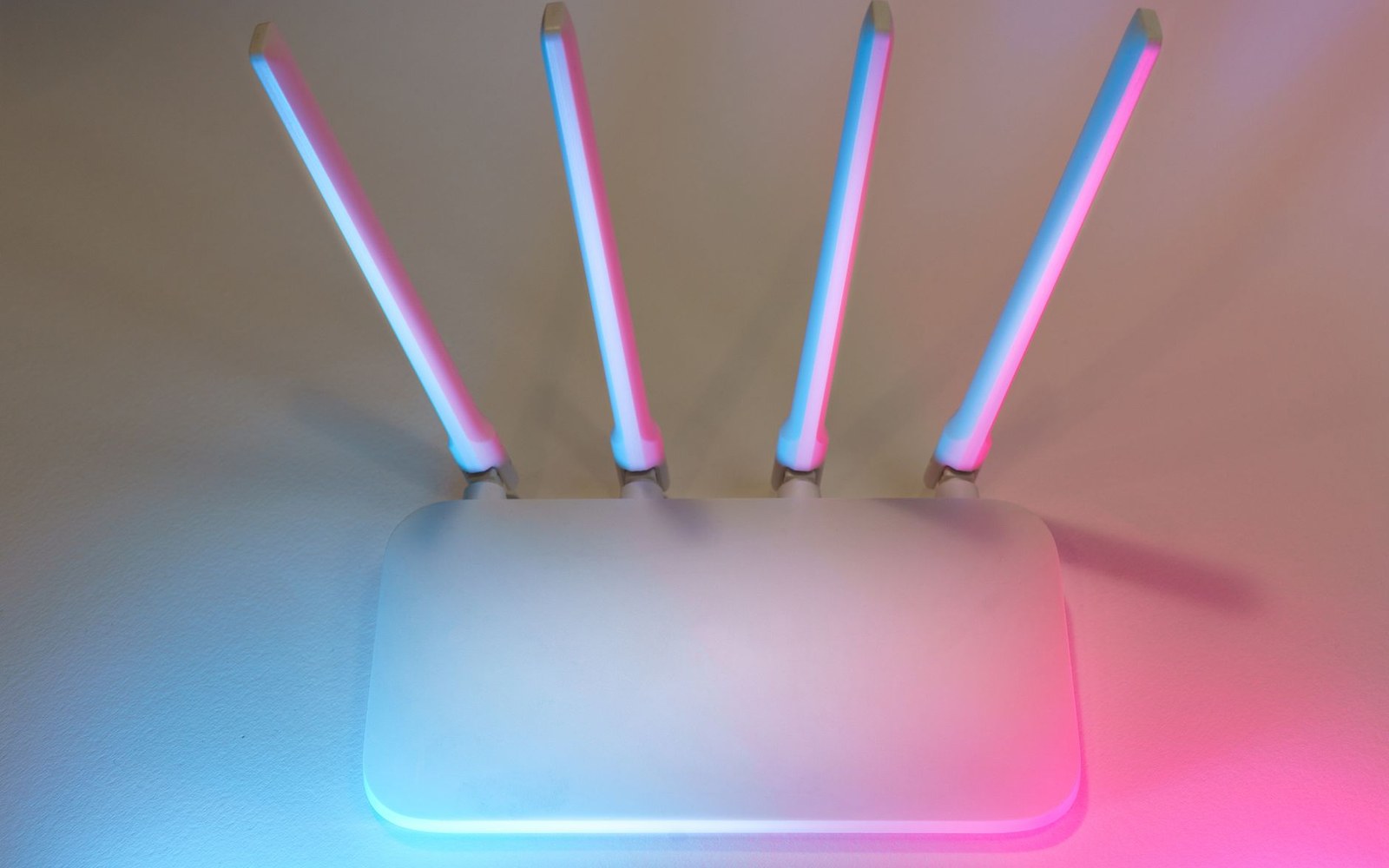
Four external antennas is a marketing decision as much as a radio one; the count follows the spatial streams the chipset supports.
Photo: Jakub Zerdzicki / Pexels
Start here
Two megabits, and almost nobody used it
The original 802.11 was ratified in 1997 at up to 2 Mbit/s, and it took 802.11b in 1999 to make wireless networking practical.
Everything in Lineage
- Two megabits, and almost nobody used itThe original 802.11 was ratified in 1997 at up to 2 Mbit/s, and it took 802.11b in 1999 to make wireless networking practical.
- a, g, n, ac, ax — a line that became unreadableThe lettered amendments carried real technical changes, and by 2018 the Wi-Fi Alliance renamed them retroactively because the letters had stopped communicating.
- Adding a band, then adding widthWi-Fi 6E opened the 6 GHz band and Wi-Fi 7 widened channels and added multi-link operation, both of which are spectrum decisions before they are silicon ones.
- A parallel line, defined by releasesGSM from 1991 through UMTS to LTE in 2009 is a sequence of 3GPP releases, which is why cellular generations have dates rather than launch events.
- Two very different things under one name5G NR splits into sub-6 GHz and mmWave, and the difference in reach between them is large enough that they behave like separate technologies.
The other four sections