Lineage · Two lines of descent
A parallel line, defined by releases
GSM from 1991 through UMTS to LTE in 2009 is a sequence of 3GPP releases, which is why cellular generations have dates rather than launch events.
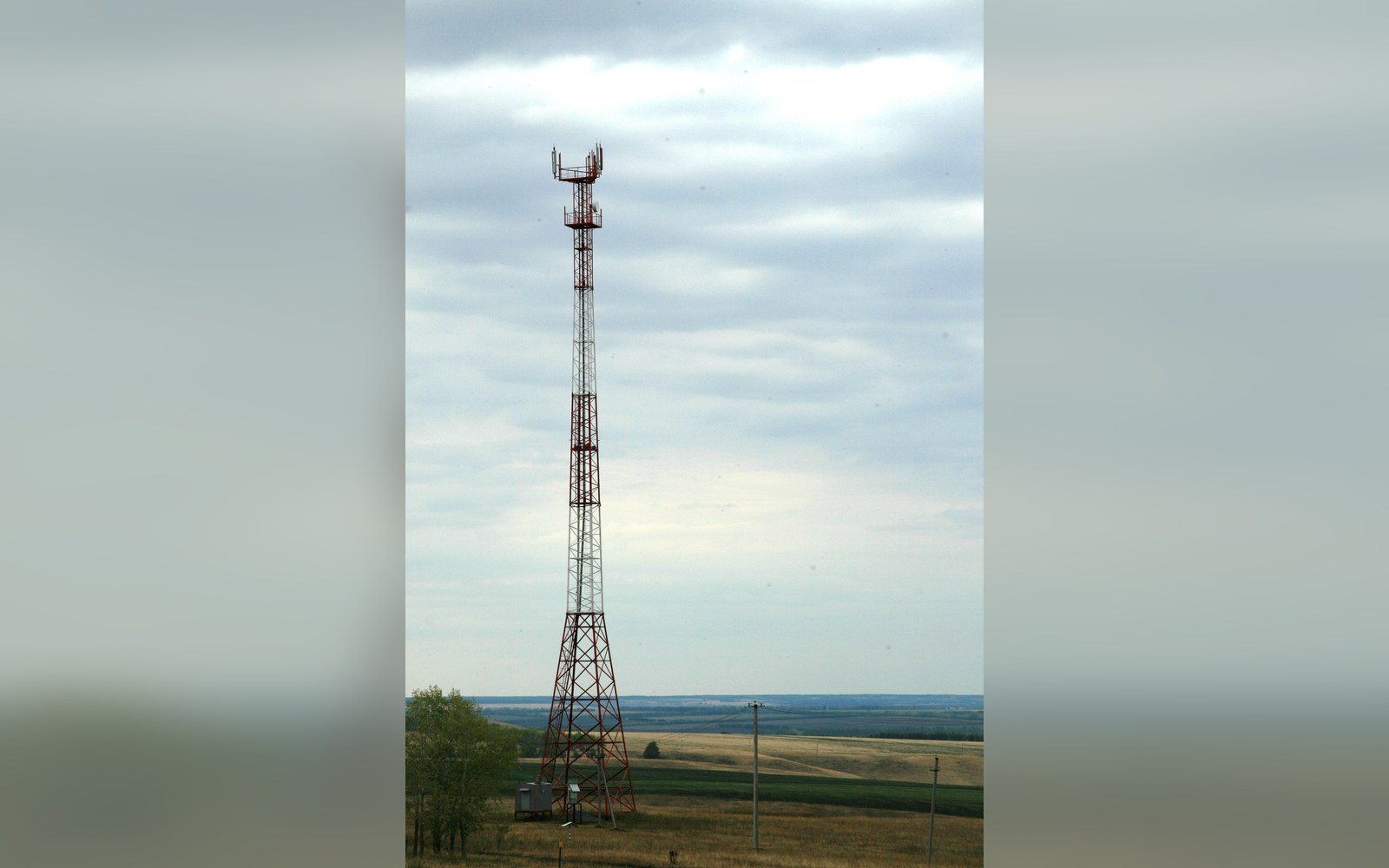
Cellular didn't get a new standard for each generation — it got a new release number, and the rest was deployment.
From GSM to the release clock
The cellular lineage begins not with a product announcement but with a working group. What became GSM — the Global System for Mobile Communications — was drafted inside ETSI, the European Telecommunications Standards Institute, through the late 1980s, and the first commercial networks opened in 1991. Finland's Radiolinja is usually credited with the first public GSM call, in July of that year. The technology was circuit-switched: a voice call held a dedicated time slot for its duration, and data, when it arrived at all, moved as slowly as a dial-up modem.
The standard that defined GSM did not remain frozen. It was maintained through numbered phases — Phase 1, Phase 2, Phase 2+ — each adding capability without breaking what existed. General Packet Radio Service, universally called GPRS, arrived as a Phase 2+ addition and overlaid a packet-switched data channel on the existing infrastructure. The peak headline rate was modest, around 114 kbit/s under ideal conditions, and real throughput was lower. EDGE, Enhanced Data rates for GSM Evolution, pushed that ceiling higher by changing the radio modulation scheme, again without requiring new base-station hardware in most cases. Neither GPRS nor EDGE was a new generation in any fundamental architectural sense; both were incremental extensions of the same document lineage.
That document lineage changed its address in 1998, when the Third Generation Partnership Project — 3GPP — was formed. 3GPP brought together regional standards bodies including ETSI, Japan's ARIB, and North America's ATIS under a single coordinating structure, and it inherited custodianship of the GSM specifications. From that point the version-control mechanism was explicit: features entered the standard through numbered Releases, each with a freeze date after which no new features could be added to that release's scope. Release 99, frozen in late 1999, was the first to fully specify UMTS — Universal Mobile Telecommunications System — the architecture the ITU was designating as IMT-2000.
Chronology of releases
- 1991GSM Phase 1 commercial deployment begins (Radiolinja, Finland)
- 19983GPP formed; inherits GSM specification custody
- Release 99 (frozen 1999)defines UMTS / IMT-2000 radio interface
- Release 5 (frozen 2002)adds HSDPA; downlink peak rises to ~14.4 Mbit/s
- Release 6 (frozen 2004)adds HSUPA; HSPA marketing term emerges
- Release 8 (frozen December 2008)defines LTE and the Evolved Packet Core
- December 2009first commercial LTE networks, Oslo and Stockholm
- Release 10 (frozen 2011)LTE-Advanced; first to meet ITU IMT-Advanced criteria
- Release 15 (2018)first 5G NR release; Non-Standalone December 2017, Standalone June 2018
- Release 16 (2020)industrial IoT, positioning enhancements
- Release 17 (2022)satellite access, RedCap reduced-capability profile
- Release 18designated "5G-Advanced"
UMTS, the release ladder, and the path to LTE
UMTS was the genuine architectural break. It replaced the time-division multiple-access radio layer of GSM with Wideband CDMA — code-division multiple access over a 5 MHz carrier — and moved the core network substantially closer to a packet-switched design. The ITU had set IMT-2000 as the framework for what the industry would market as "3G," and UMTS, alongside cdma2000 from the North American lineage, was one of the primary radio interfaces approved under that umbrella. Commercial UMTS deployments began in Japan in 2001, with European networks following in 2003.
But UMTS itself was a starting point, not a ceiling. Release 5, frozen in 2002, added HSDPA — High-Speed Downlink Packet Access — raising the theoretical downlink ceiling from the original 384 kbit/s to around 14.4 Mbit/s. Release 6 added the uplink counterpart, HSUPA. Together, HSDPA and HSUPA were marketed as HSPA, and then HSPA+, eventually reaching downlink peaks of 42 Mbit/s in dual-carrier configurations. Each of these was still UMTS; the radio access network changed, the spectrum did not, and a handset from 2008 connecting to an HSPA+ cell was using a direct evolutionary descendant of the Release 99 architecture.
The internal logic of this pattern — keep the release number as the authoritative version, accumulate capability, hold the freeze date as a contract between implementers — is why cellular generations do not map cleanly onto calendar years the way Wi-Fi amendments once did. A "generation" is a marketing claim layered over a particular cluster of releases; the real milestone is the freeze date printed inside the specification.
Release 8, frozen in December 2008, is the release that defined LTE — Long-Term Evolution. LTE's architectural break was decisive: the circuit-switched core disappeared entirely, replaced by the Evolved Packet Core, and voice became just another IP application. The radio interface moved to OFDMA — Orthogonal Frequency-Division Multiple Access — on the downlink, with SC-FDMA on the uplink, and the system was designed from the outset around MIMO antenna configurations. The first commercial LTE networks launched in December 2009, in Oslo and Stockholm, operated by TeliaSonera. The ITU initially declined to designate LTE as "4G" under its IMT-Advanced framework, because the peak requirements set by IMT-Advanced exceeded what Release 8 LTE could deliver at launch. The industry used "4G" anyway; the ITU eventually accommodated the terminology.
LTE-Advanced and the 5G turn
LTE did not stop at Release 8. Release 10, frozen in 2011, introduced LTE-Advanced, the version that formally met the ITU's IMT-Advanced criteria. Carrier aggregation — combining multiple non-contiguous spectrum blocks into a single logical channel — was the headline feature, alongside advances in MIMO configuration. Release 13, sometimes called LTE-Advanced Pro, added machine-type communication profiles and narrowband IoT specifications, extending the standard into territory well beyond smartphone connectivity. By Release 15, the final release 3GPP classified under the LTE family before the 5G boundary, the specification was carrying capabilities that would have been unrecognizable to the engineers who froze Release 99.
Release 15 is simultaneously the first 5G NR release. 5G NR — New Radio — was frozen in phases: the Non-Standalone option, allowing 5G NR to anchor to an LTE core, arrived in December 2017; the Standalone option, with a full 5G core, in June 2018. This two-step freeze reflected commercial reality: operators could light up 5G radios against their existing LTE infrastructure immediately, without waiting for a full core replacement. Release 16, frozen in 2020, and Release 17, frozen in 2022, have added industrial IoT profiles, satellite access, and enhanced positioning. Release 18 carries the branding "5G-Advanced."
The spectrum underneath all of this has been allocated and auctioned separately in each country, shaped by the ITU's regional framework, which is why the bands a 5G handset uses in South Korea differ from those used in Germany or the United States. Sub-6 GHz deployments — using frequencies below 6 GHz — deliver broad coverage; millimetre-wave deployments, above 24 GHz, deliver high throughput at short range. Both operate under the 5G NR specification; the radio behaviour is governed by which frequency range the device and base station negotiate.
The ITU initially declined to designate LTE as "4G" under its IMT-Advanced framework, because the peak requirements set by IMT-Advanced exceeded what Release 8 LTE could deliver at launch.
The thread running from that first GSM call in 1991 to a Release 18 base station is unbroken: the same standards body, the same release discipline, a continuous accumulation of technical decisions frozen in documents with specific dates. Cellular generations are named after marketing cycles. The releases are what actually happened.
Key bodies and their roles
- 3GPP — writes and maintains the numbered releases; not a membership body in the public sense; outputs technical specifications
- ETSI — founding regional partner; hosts much of the GSM/UMTS heritage documentation
- ITU — sets the IMT framework (IMT-2000, IMT-Advanced, IMT-2020) that releases must satisfy to carry a generation label
- National regulators (FCC, Ofcom, and others) — auction and assign the spectrum that releases run on; each does so independently
Also in Lineage
Read next
The rest of two lines of descent
- LineageTwo megabits, and almost nobody used itThe original 802.11 was ratified in 1997 at up to 2 Mbit/s, and it took 802.11b in 1999 to make wireless networking practical.
- Lineagea, g, n, ac, ax — a line that became unreadableThe lettered amendments carried real technical changes, and by 2018 the Wi-Fi Alliance renamed them retroactively because the letters had stopped communicating.
 LineageAdding a band, then adding widthWi-Fi 6E opened the 6 GHz band and Wi-Fi 7 widened channels and added multi-link operation, both of which are spectrum decisions before they are silicon ones.