Lineage · Two lines of descent
a, g, n, ac, ax — a line that became unreadable
The lettered amendments carried real technical changes, and by 2018 the Wi-Fi Alliance renamed them retroactively because the letters had stopped communicating.
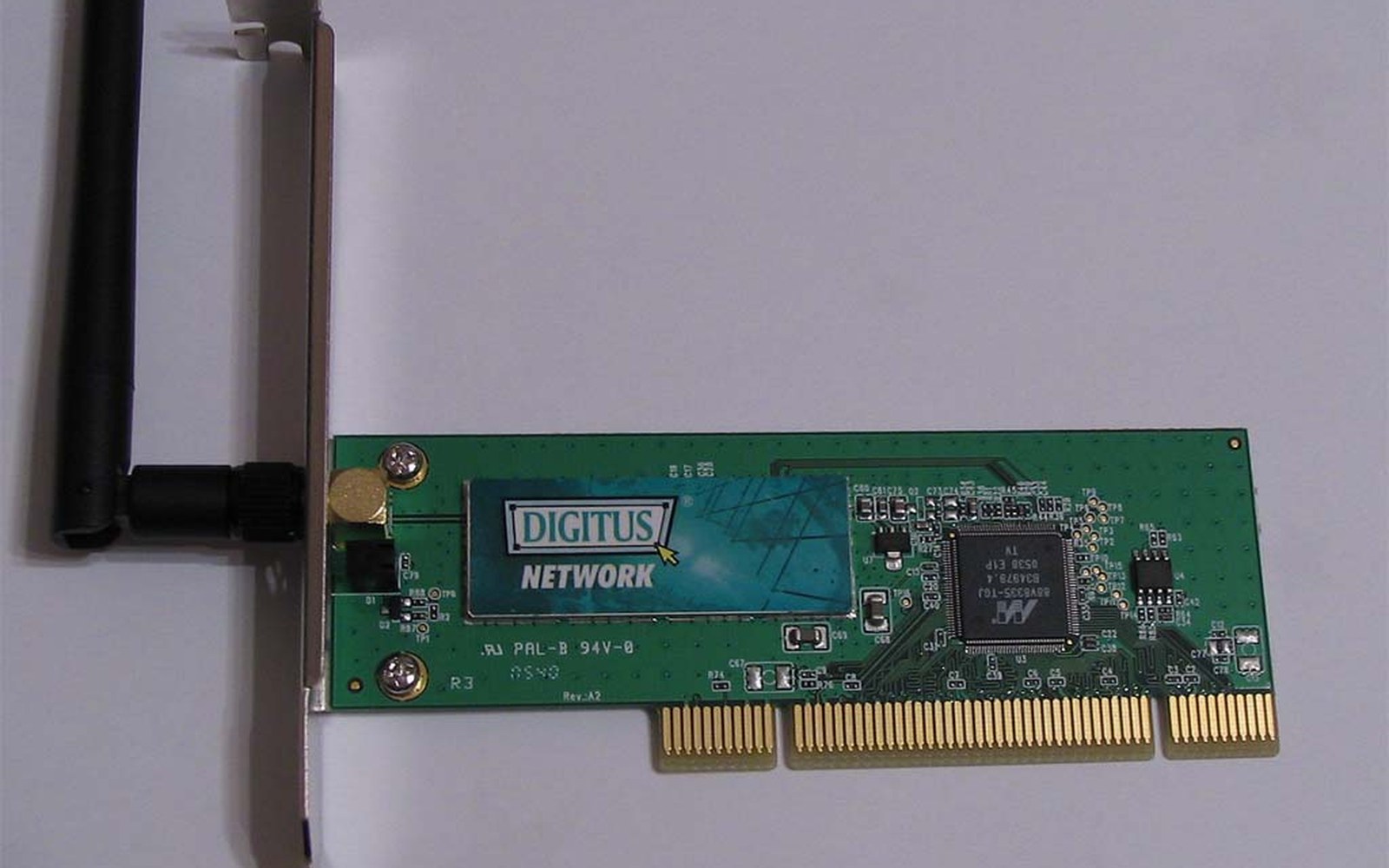
The lettered amendments to 802.11 carried genuine engineering advances; by 2018 the Wi-Fi Alliance had renamed them because the letters had stopped communicating anything to anyone.
From two megabits to a naming crisis
The original 802.11, ratified by the IEEE in June 1997, delivered up to 2 Mbit/s in the 2.4 GHz ISM band using either frequency-hopping or direct-sequence spread spectrum. It was a proof of concept more than a product. The amendment that changed everything was 802.11b, approved in September 1999, which pushed that same 2.4 GHz band to 11 Mbit/s using complementary code keying and, crucially, appeared in consumer hardware at a price ordinary businesses could absorb. That is the moment Wi-Fi became a real market.
What followed was a sequence of lettered amendments, each carrying a distinct technical agenda. 802.11a arrived the same year as 802.11b — also 1999 — but it moved to the 5 GHz U-NII bands and delivered up to 54 Mbit/s using orthogonal frequency-division multiplexing, the modulation scheme that would persist through every subsequent generation. The 5 GHz band was less congested and carried more channels, but the physics were unforgiving: higher frequencies lose energy faster, so range suffered relative to 2.4 GHz 802.11b. The market chose 802.11b first and 802.11a later, which is why the letters fell out of alphabetical order in the popular imagination.
802.11g, approved in June 2003, resolved the awkward split by bringing OFDM to 2.4 GHz, matching 802.11a's 54 Mbit/s headline figure while remaining backward-compatible with 802.11b hardware. It dominated the market for most of the decade. Then came 802.11n, approved in September 2009 after a standards process so prolonged that draft-n hardware had been shipping for years. 802.11n was the first amendment to introduce MIMO — multiple-input, multiple-output — pairing multiple antennas with spatial multiplexing to send independent data streams simultaneously. The top PHY rate reached 600 Mbit/s across four spatial streams, and the amendment covered both 2.4 GHz and 5 GHz. It also introduced 40 MHz channel bonding, doubling the channel width that earlier amendments had used.
Amendment chronology
- 802.11 (1997)original spec; up to 2 Mbit/s; 2.4 GHz; FHSS/DSSS
- 802.11b (1999)11 Mbit/s; 2.4 GHz; CCK; first mass-market adoption
- 802.11a (1999)54 Mbit/s; 5 GHz; OFDM; limited adoption at launch
- 802.11g (2003)54 Mbit/s; 2.4 GHz; OFDM; backward-compatible with b
- 802.11n (2009)up to 600 Mbit/s; 2.4 + 5 GHz; MIMO; 40 MHz bonding → Wi-Fi 4
- 802.11ac (2013)multi-Gbit peak; 5 GHz only; 80/160 MHz; MU-MIMO downlink → Wi-Fi 5
- 802.11ax (2021)OFDMA; uplink MU-MIMO; TWT; 2.4 + 5 GHz → Wi-Fi 6
ac, ax, and the alphabet's slow collapse
802.11ac, approved in December 2013, confined itself entirely to 5 GHz and pushed channel widths to 80 MHz, with optional 160 MHz bonding. It added 256-QAM modulation — encoding more bits per symbol — and extended MU-MIMO to the downlink direction, so an access point could transmit to multiple clients simultaneously rather than serving them in round-robin fashion. Wave 1 and Wave 2 product certifications through the Wi-Fi Alliance marked successive capability tiers within the same amendment, a sign that the spec was already complex enough to require internal subdivision. Theoretical peaks reached multi-gigabit figures on eight spatial streams, though real-world environments seldom approached them.
802.11ax, whose development began around 2014 and which the IEEE finalized in February 2021, took a different philosophy. Where the previous amendments had focused on raising peak rates, 802.11ax was designed primarily for dense environments — stadiums, apartment blocks, office buildings where dozens of devices share the same spectrum. It introduced OFDMA, which subdivides a channel into smaller resource units so the access point can serve multiple clients within a single transmission opportunity rather than one at a time. It added uplink MU-MIMO alongside the downlink version already present in 802.11ac, extended operation to 2.4 GHz as well as 5 GHz, and brought Target Wake Time scheduling so battery-powered devices could negotiate precise sleep intervals rather than polling constantly. The improvement in average throughput in congested environments was the point; headline peak rates, while higher, were secondary.
By that time, however, something had broken in the naming. Six headline amendments into the 802.11 lineage — b, a, g, n, ac, ax, plus others like j, p and ad for specialized applications — the letter scheme communicated nothing to the people buying or deploying the hardware. A product manager, a facilities coordinator or a procurement officer had no mental model into which "ax" meaningfully landed. The letters were not a hierarchy, they were not memorable, and they did not suggest capability. Surveys conducted by the Wi-Fi Alliance confirmed that most end users could not correctly rank the amendments by generation.
The rename and what it admitted
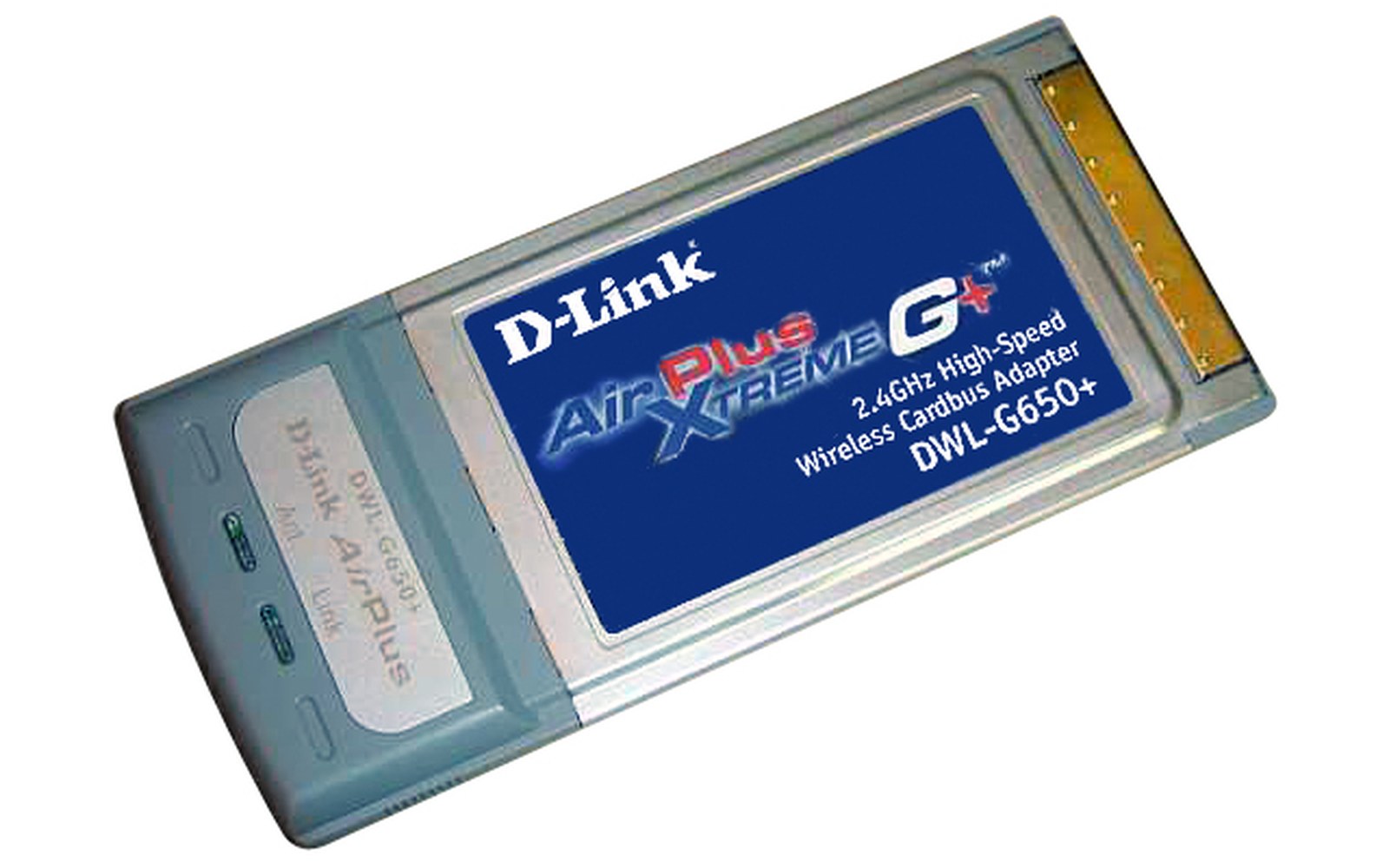
In September 2018, the Wi-Fi Alliance applied generation numbers retroactively: 802.11n became Wi-Fi 4, 802.11ac became Wi-Fi 5, and 802.11ax became Wi-Fi 6. Earlier amendments were not officially numbered, a quiet acknowledgment that the consumer-relevant lineage started with n. The naming was certified by the Alliance rather than standardized by the IEEE, which is the correct read on what the Wi-Fi Alliance actually does: it certifies interoperability and manages branding; the underlying technical specification remains an IEEE document with a letter appended.
The retroactive numbering was an admission that two decades of organic amendment growth had produced a sequence unreadable by any audience outside the engineering community. Wi-Fi 6E, introduced in 2021, extended 802.11ax operation into the 6 GHz band where regulators including the FCC had opened new spectrum — a band change notable enough to warrant its own suffix but not a new generation number. Wi-Fi 7, corresponding to 802.11be, followed with the next integer, bringing 320 MHz channels, multi-link operation across bands, and 4096-QAM to further compress more bits per symbol.
The lettered amendments were never arbitrary. Each one encoded a genuine decision about spectrum, modulation, channel width, antenna architecture or scheduling discipline. 802.11a's move to 5 GHz in 1999 anticipated congestion in 2.4 GHz that would take years to arrive. 802.11n's MIMO framework established the spatial-multiplexing principle that every subsequent amendment refined. 802.11ax's OFDMA scheduler addressed the deployment reality of dense urban wireless in a way that a pure peak-rate improvement never could. The engineering lineage is coherent; the IEEE 802 working group produced a body of work with genuine internal logic.
It introduced OFDMA, which subdivides a channel into smaller resource units so the access point can serve multiple clients within a single transmission opportunity rather than one at a time.
What the letters failed to do was carry that logic to the people who had to choose, deploy and support the hardware. The generation numbers did not change the physics or the standards; they repackaged a real history into a form the market could use. The underlying sequence — b, g, n, ac, ax — remains the factual record, and reading it correctly still requires knowing which year each amendment cleared ballot and what problem its authors were actually trying to solve.
The rename in brief
- Body that renamed: Wi-Fi Alliance (September 2018)
- Body that writes the spec: IEEE 802.11 Working Group
- Wi-Fi 4 = 802.11n
- Wi-Fi 5 = 802.11ac
- Wi-Fi 6 = 802.11ax
- Wi-Fi 6E = 802.11ax extended to 6 GHz
- Wi-Fi 7 = 802.11be (next integer, not a retroactive assignment)
Also in Lineage
Read next
The rest of two lines of descent
- LineageTwo megabits, and almost nobody used itThe original 802.11 was ratified in 1997 at up to 2 Mbit/s, and it took 802.11b in 1999 to make wireless networking practical.
- LineageAdding a band, then adding widthWi-Fi 6E opened the 6 GHz band and Wi-Fi 7 widened channels and added multi-link operation, both of which are spectrum decisions before they are silicon ones.
 LineageA parallel line, defined by releasesGSM from 1991 through UMTS to LTE in 2009 is a sequence of 3GPP releases, which is why cellular generations have dates rather than launch events.