Timeline · In order, with dates
LTE, and the end of the circuit
LTE moved cellular to an all-IP core, which is the change that made voice a service on the data network rather than the other way round.

The Release 8 specification did not merely add speed — it abolished the telephone as a concept.
A new core, not just a faster radio
Every cellular generation before LTE carried its heritage forward. GSM was fundamentally a circuit-switched network: when a call began, the network reserved a dedicated channel for its entire duration, idle or not. GPRS and EDGE bolted packet data onto that architecture without replacing it. Even UMTS, which was sold as a broadband leap, kept a circuit-switched domain alive for voice and fell back to it routinely. The engineers at 3GPP knew by the mid-2000s that this compromise could not scale. The answer, ratified in Release 8 in December 2008, was the Evolved Packet Core — no circuit-switched domain at all, just IP, end to end.
The radio side, E-UTRA (Evolved UMTS Terrestrial Radio Access), adopted OFDMA on the downlink and SC-FDMA on the uplink. OFDMA — orthogonal frequency-division multiple access — divides a channel into narrow subcarriers and assigns them dynamically across users, which lets the scheduler exploit momentary variations in signal quality rather than wasting capacity on a fixed pipe. The subcarrier spacing was set at 15 kHz; the basic scheduling unit, called a resource block, groups twelve of them over one millisecond. That millisecond granularity is what made LTE feel responsive in a way UMTS never quite managed.
Initial carrier bandwidths ran from 1.4 MHz to 20 MHz. A single 20 MHz downlink channel using 2×2 MIMO and 64-QAM modulation could deliver around 150 Mbit/s in theory; real deployments achieved far less, but the architecture meant that capacity scaled cleanly with additional spectrum and antenna pairs. 3GPP Release 8 is documented in the consortium's own specification index, where the E-UTRA and EPC families carry their original publication dates.
Chronology
- December 2009First commercial LTE networks, TeliaSonera, Stockholm and Oslo
- December 20083GPP Release 8 ratified; E-UTRA and EPC specifications published
- December 2009First commercial LTE networks, TeliaSonera, Stockholm and Oslo
- 2010Verizon launches LTE in 38 US markets on 700 MHz
- 2011Release 10 (LTE-Advanced) meets ITU IMT-Advanced peak-rate requirements
- 2016–2018VoLTE widespread; CSFB begins retirement in most major markets
Voice as an afterthought, then as a proper service
Removing the circuit-switched domain created an immediate problem: there was no native voice path. Early LTE deployments handled this by CSFB — Circuit Switched FallBack — dropping the handset from LTE to a 3G or 2G cell whenever a call arrived. This was inelegant, and the latency of the mode switch was noticeable. VoLTE, Voice over LTE, was the proper fix: voice encoded as AMR-WB (Adaptive Multi-Rate Wideband), packetised over RTP, delivered with QoS priority in the IMS — IP Multimedia Subsystem — framework. The ITU recognises LTE within the IMT-Advanced family, though the original Release 8 specification required a waiver against the ITU's peak rate requirements; Release 10 (LTE-Advanced, 2011) met them properly through carrier aggregation and expanded MIMO.
The practical consequence of all-IP voice was better audio. AMR-WB, colloquially HD Voice, extends the speech frequency range from the old PSTN ceiling of 3.4 kHz up to 7 kHz. The improvement is audible to anyone who has switched mid-call from a VoLTE segment to a 2G fallback segment. It is not a marketing claim; it is arithmetic — more frequency bins, less codec compression, less noise.
Deployment, the FCC, and spectrum underneath
The first commercial LTE networks launched in December 2009, in Stockholm and Oslo, operated by TeliaSonera. The United States followed in 2010, when Verizon lit up service in 38 markets on the 700 MHz Band 13 spectrum it had acquired at the FCC's 700 MHz auction (Auction 73), which closed in 2008 and raised roughly 19.6 billion dollars. The 700 MHz frequencies — cleared from analogue television — had the propagation characteristics that made indoor coverage tractable, and their availability in a single large contiguous country accelerated the US build-out considerably.
LTE was eventually deployed across dozens of frequency bands globally, a proliferation that complicated device design sharply; the RF front end in an international handset has to filter and amplify signals across bands separated by hundreds of megahertz, sometimes simultaneously through carrier aggregation. By the time 3GPP closed work on Release 15 and opened the 5G NR era, LTE remained the dominant data bearer on most of the world's networks, and Release 15 formalized its continued role as an anchor leg in 5G non-standalone deployments.
The telephone did not disappear. It simply became an app.
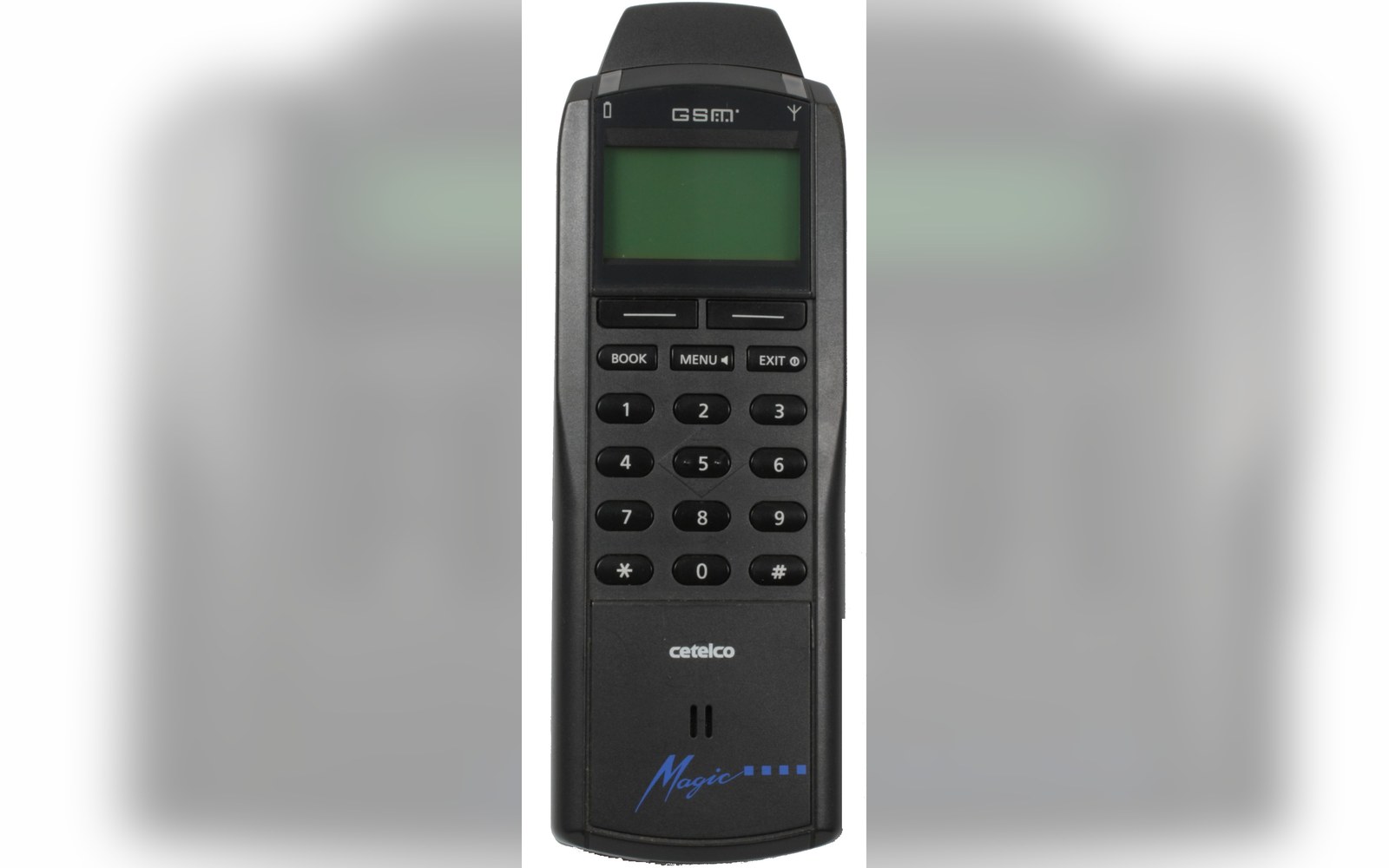
GSM was fundamentally a circuit-switched network: when a call began, the network reserved a dedicated channel for its entire duration, idle or not.
Key technical thresholds
- Subcarrier spacing: 15 kHz
- Basic time-frequency unit: resource block = 12 subcarriers × 1 ms
- Maximum downlink channel width (Release 8): 20 MHz
- Peak theoretical downlink (20 MHz, 2×2 MIMO, 64-QAM): ~150 Mbit/s
- AMR-WB speech bandwidth: up to 7 kHz (vs. 3.4 kHz for legacy PSTN)
Read next
The rest of in order, with dates
- TimelineGSM goes liveThe first GSM networks opened in 1991 and set the pattern of a standard defined before deployment rather than after it.
- TimelineWi-Fi 6 was a rename, not a releaseThe Wi-Fi Alliance applied generation numbers retroactively in 2018, an admission that the lettering had failed as communication.
 TimelineWi-Fi 7 and the width problemWi-Fi 7's widest channels need spectrum that not every regulator has released, so the same product performs differently by country.