Spectrum · The part nobody sees
The unlicensed slice everything crowds into
The ISM bands were set aside for industrial, scientific and medical use, and Wi-Fi, Bluetooth and Zigbee all share them by accident of that allocation.
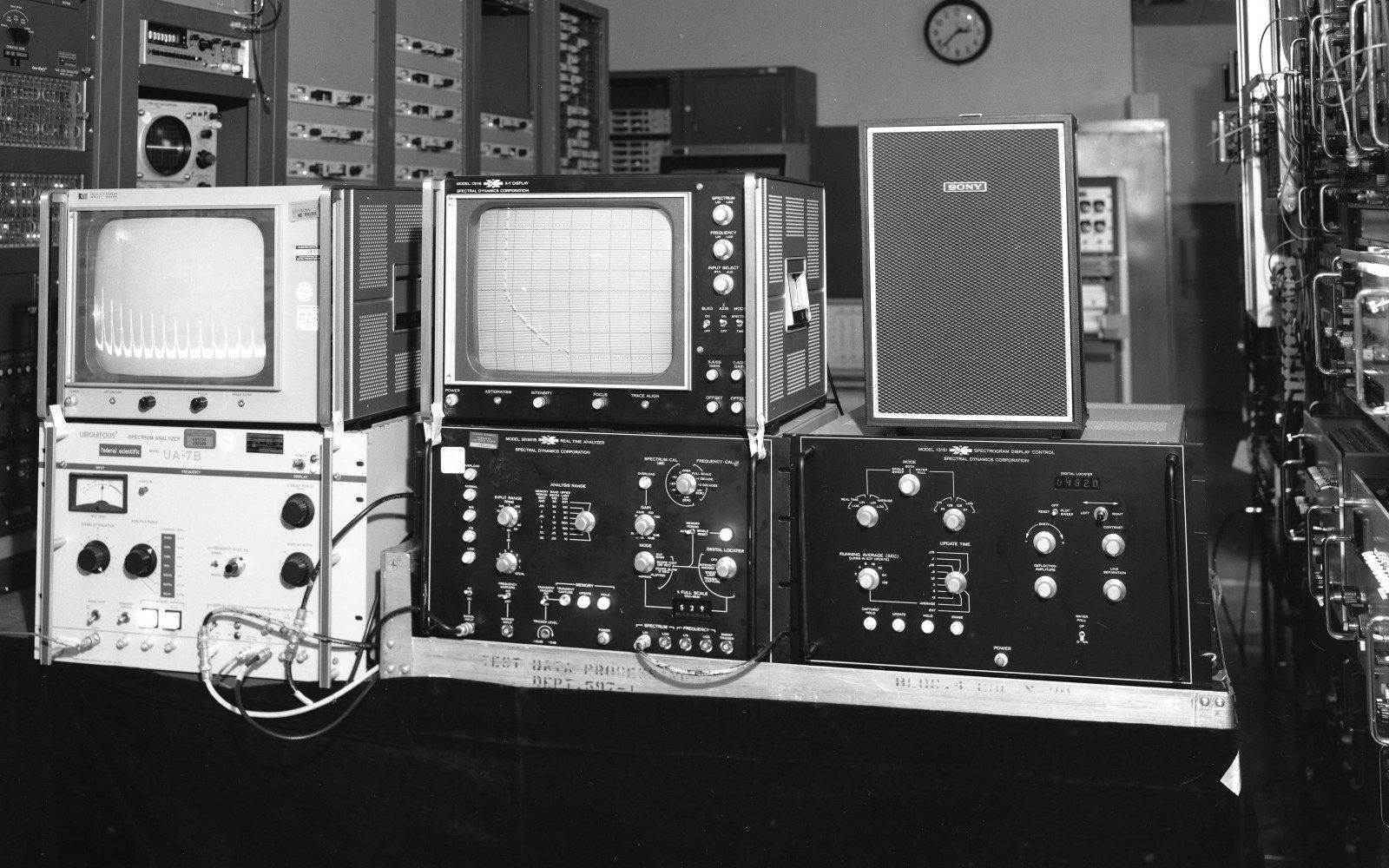
ISM bands were created for microwave ovens and diathermy machines. Wi-Fi, Bluetooth and Zigbee arrived later and never left.
A designation that predates modern wireless
The letters stand for industrial, scientific and medical, and the bands they name were not designed for communication. The ITU carved out the first ISM allocations in 1947, at the Atlantic City radio conference, to give high-power non-communication devices — industrial heating equipment, medical diathermy machines, scientific instruments generating incidental RF — a place to radiate without disrupting licensed services. The philosophy was containment rather than access: put the interference sources in a box and let everything else coexist around them.
The 2.4 GHz band, running from 2.400 to 2.4835 GHz, became the most consequential of those allocations. The 5.8 GHz ISM band (5.725–5.850 GHz) overlaps what would later become the 5 GHz UNII-3 band that Wi-Fi now also occupies. A third ISM band at 902–928 MHz matters primarily in ITU Region 2 — the Americas — and hosts a different ecology of low-power sensors and proprietary radios. The ITU's Radio Regulations still define ISM allocations separately from communication allocations, a legal distinction that has almost nothing to do with how the spectrum is actually used today.
The pivot came when regulators, notably the FCC, began permitting low-power spread-spectrum communication devices in ISM spectrum under Part 15 of the Code of Federal Regulations. The FCC's 1985 rulemaking was the enabling act: it allowed unlicensed transmitters provided they met power limits and used spread-spectrum techniques to reduce interference to licensed users. No license, no filing, no coordination. Entrepreneurs and engineers read the ruling and immediately began treating 2.4 GHz as theirs.
Chronology
- 1947ITU Atlantic City conference first designates ISM bands
- 1985FCC Part 15 rulemaking permits unlicensed spread-spectrum communication in ISM bands
- 1997FCC UNII rules open initial 5 GHz spectrum; IEEE 802.11 ratified
- 1999IEEE 802.11b ratified (2.4 GHz, 11 Mbit/s); Bluetooth 1.0 published by Bluetooth SIG
- 2003IEEE 802.15.4 ratified; Zigbee standardization begins; FCC expands UNII bands
- 2013802.11ac (Wi-Fi 5) uses 5 GHz wide channels; further UNII expansion
- 2019802.11ax (Wi-Fi 6) ratified
- 2020FCC opens 6 GHz band for unlicensed use (April)
- 2021Wi-Fi 6E certification begins
- 2024Wi-Fi 7 certification begins
Three different technologies, one crowded room
IEEE 802.11b, ratified in 1999 and the standard that made Wi-Fi a consumer product, operated in the 2.4 GHz ISM band at up to 11 Mbit/s using direct-sequence spread spectrum. Bluetooth 1.0, published by the Bluetooth SIG in 1999 as well, occupied the same 2.400–2.4835 GHz slice using frequency-hopping spread spectrum across 79 channels, jumping 1,600 times per second to sidestep collisions. The two systems had been designed independently, by different groups, for different purposes, and they met in 2.4 GHz not by any shared planning but because both had noticed the same open door.
Zigbee, standardized under IEEE 802.15.4 starting in 2003 and certified by the Connectivity Standards Alliance (then the Zigbee Alliance), added a third occupant. It uses 2.4 GHz for its global channel plan, divided into 16 channels of 2 MHz width each, and targets sensor networks and building automation rather than throughput. The duty cycle — the fraction of time a radio actually transmits — is kept low by design, which is Zigbee's main contribution to the coexistence problem: a radio that is silent most of the time causes less aggregate interference than one that talks continuously.
The mechanisms these three technologies use to avoid each other are different in kind. Bluetooth's frequency hopping is the oldest, and it is partly effective — a Bluetooth piconet cycles through channels fast enough that any collision with a Wi-Fi transmission is momentary. Wi-Fi uses CSMA/CA (carrier-sense multiple access with collision avoidance), listening before transmitting. Zigbee relies on CSMA/CA at low duty cycles. None of these mechanisms were designed to interoperate; coexistence emerged from engineering margins, not from any coordinating body.
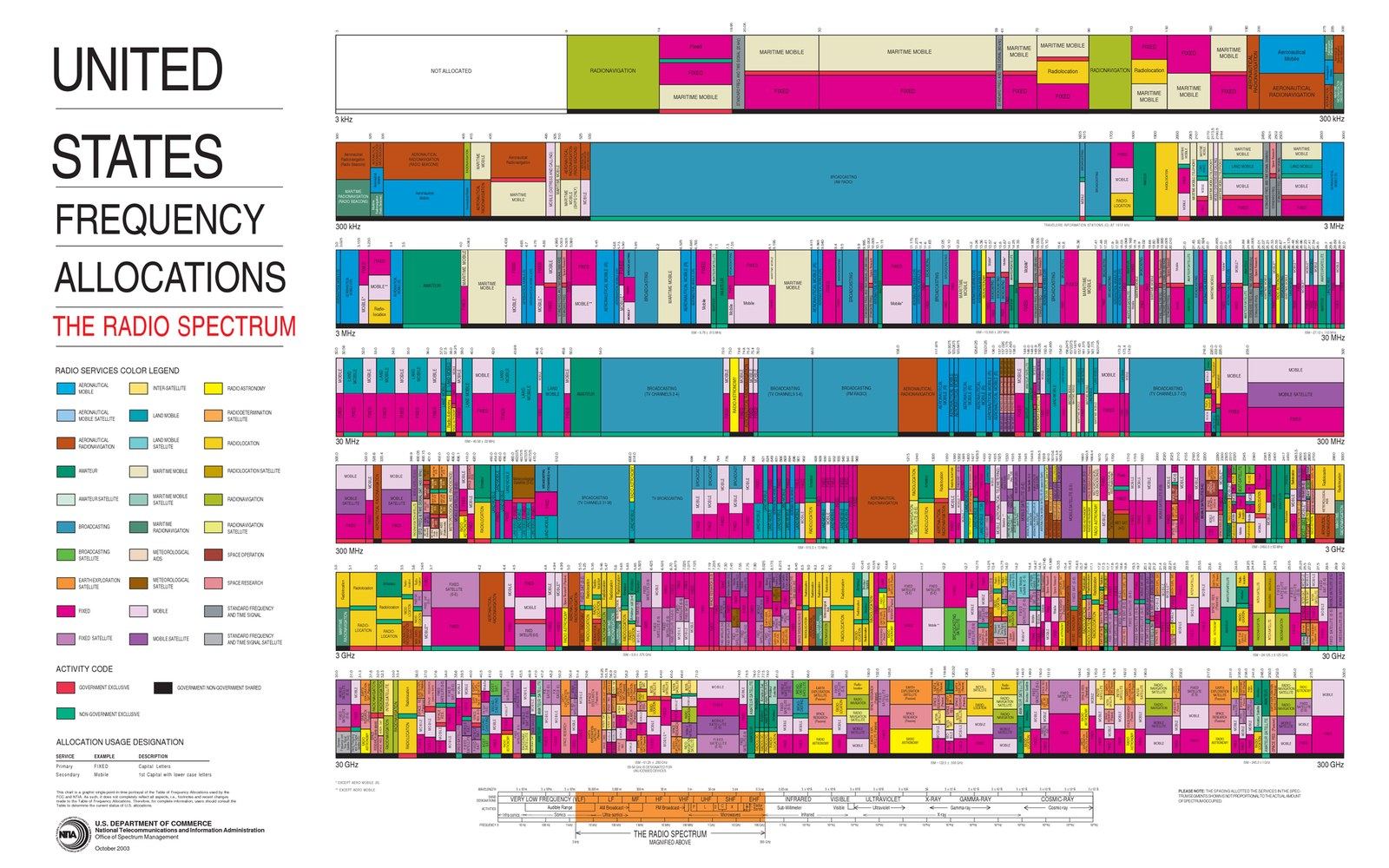
The 2.4 GHz band in a dense apartment building or a conference hall represents the limit case. Wi-Fi in 2.4 GHz has only three non-overlapping 20 MHz channels in most of the world (channels 1, 6 and 11), meaning every access point is competing on one of three tracks. Microwave ovens, which are the original ISM tenants, radiate broad interference centered near 2.45 GHz — squarely across channel 9 and spilling onto channels 6 and 11. Cordless phones, baby monitors and poorly shielded consumer electronics add to the floor. The 2.4 GHz ISM band is, by any reasonable measure, the most contested two-digit slice of spectrum that has ever been opened to the public.
The 5 GHz expansion and the limits of more space
The FCC's Unlicensed National Information Infrastructure (UNII) rules, introduced in 1997 and expanded substantially in 2003, 2013 and 2014, opened the 5 GHz range incrementally — UNII-1 through UNII-3 now collectively span roughly 580 MHz of usable spectrum. This is far more than 2.4 GHz offers, and the wider channels that IEEE 802.11ac (Wi-Fi 5, 2013) and 802.11ax (Wi-Fi 6, 2019) exploited — 80 MHz and 160 MHz — are feasible only here. The 5 GHz bands require Dynamic Frequency Selection (DFS) in portions used by radar systems, which means a Wi-Fi radio must detect incumbent radar signals and vacate within 10 seconds if one appears. DFS is not an ISM mechanism; it is a protection rule layered on a different class of allocation, but it illustrates the same underlying tension: licensed users have priority, and unlicensed devices absorb the cost of clearing them.
Wi-Fi 6E, certified by the Wi-Fi Alliance from 2021, and Wi-Fi 7, certified from 2024, pushed into the 6 GHz band — 5.925 to 7.125 GHz in the United States, a narrower slice in other jurisdictions. The 6 GHz band is not an ISM band; it was opened under a specific FCC Report and Order in April 2020, granting unlicensed access under strict power limits to prevent interference to incumbent fixed and mobile services. Spectrum is not unlimited, and each expansion arrives later and has to be shared under stricter rules.
Who manages the unmanaged
The paradox of ISM and unlicensed spectrum is that it functions through rules set by governments but inside those rules has no coordinator. The ITU establishes the international framework through its Radio Regulations, dividing responsibilities among its three regions. Within each region, national regulators — the FCC in the United States, Ofcom in the United Kingdom, and national bodies implementing ETSI standards across the European Union — set the specific power limits, emission masks and access rules. No single body tells a Bluetooth headset and a Wi-Fi router and a Zigbee thermostat how to share a building's 2.4 GHz space. That negotiation happens entirely at the physics layer, in microseconds, governed by the spread-spectrum and CSMA rules that each standard independently chose.
The Wi-Fi Alliance certifies interoperability between 802.11 devices but does not coordinate spectrum use with the Bluetooth SIG, which certifies Bluetooth devices, or with the Connectivity Standards Alliance, which certifies Zigbee and Thread. ETSI publishes harmonized European standards that set emission limits and constrain equipment design, but ETSI does not manage real-time occupancy. The result is a commons that has remained functional — barely, in some environments — because every occupant was independently incentivized to transmit as little as possible and as efficiently as possible. The congestion has never been severe enough to collapse the system, and the engineering workarounds have always arrived just in time. Whether that holds as smart-home device counts climb, and as higher-power unlicensed uses propose to join the same bands, is a question regulators in multiple jurisdictions are actively examining, without yet having answered.
Bluetooth's frequency hopping is the oldest, and it is partly effective — a Bluetooth piconet cycles through channels fast enough that any collision with a Wi-Fi transmission is momentary.
Key allocations
- 902–928 MHz ISM — used primarily in ITU Region 2; sensors, proprietary radios
- 2.400–2.4835 GHz ISM — global; Wi-Fi (3 non-overlapping 20 MHz channels), Bluetooth (79 hopping channels), Zigbee (16 channels)
- 5.725–5.850 GHz ISM — overlaps with UNII-3; Wi-Fi 5/6 operations
- 5.150–5.850 GHz UNII-1 through UNII-3 — ~580 MHz available for Wi-Fi; DFS required in portions
- 5.925–7.125 GHz (US) — opened 2020; Wi-Fi 6E and Wi-Fi 7 operations

Read next
The rest of the part nobody sees
- SpectrumThe same band is not the same bandThe ITU divides the world into three regions with different allocations, which is why the same handset supports different bands in different markets.
- SpectrumGovernments sell the airNational spectrum auctions have raised sums comparable to infrastructure budgets, and the price paid shows up in what carriers build.
 SpectrumA band two industries both wantedOpening 6 GHz for unlicensed use was contested by incumbent licensees, and different regulators resolved it differently.